Your post orders are written down. The violent incident log usually isn’t.
MicroForensics, built for California private patrol operators whose solo posts make duty-free breaks structurally hard — where the defense rides on the on-duty meal agreement and its records. Since July 1, 2024, SB 553 has also required a written workplace violence prevention plan, training, and a violent incident log: the record that describes a patrol operator's ordinary shift, and the one most operators keep only halfway. A dispatcher is alerted to a short break and gets it taken while the shift is still open — and when a lawyer's letter demanding records arrives, your own authorized custodian of records answers it from one place, the SB 553 violent incident log with it. Runs on top of the WinTeam, TrackTik, or Silvertrac data your officers already produce, pairing patrol telemetry with a signed wage record. No new software at the post.
Free · 30 minutes · a fit conversation, not a sales call. If the diagnostic isn’t worth doing, we’ll tell you.
This page shows how it works in your industry. For the full walkthrough — the statute text, how we close a missed break, what the record actually contains — see MicroForensics.
Three structural reasons contract-security records fail when a PAGA notice tests them.
- 01
The solo post makes compliant breaks structurally hard.
A guard alone at a post cannot take a duty-free meal without rover relief. The lawful fallback is the on-duty meal agreement — permitted only where the nature of the work prevents relief from all duty, set down in a written agreement the officer can revoke in writing at any time. That agreement is only as good as its records, and the per-pay-period attestation is the record.
- 02
Augustus took on-call rest breaks off the table.
Augustus v. ABM Security (Cal. 2016) held that rest periods spent on call — radio on, post covered — are not rest periods. That exposure lands squarely on non-union patrol operators, and it attaches shift after shift. When a rest period doesn't fit the post, the question is whether a signed, dated record shows what actually happened.
- 03
The AB 1512 carve-out sunsets January 1, 2027.
AB 1512 abrogated Augustus for security officers under a qualifying collective bargaining agreement — but it sunsets January 1, 2027, and absent renewal in Sacramento the Augustus rules reach union shops again. For non-union operations, they never left. Either way, the operational question is the record, not the statute.
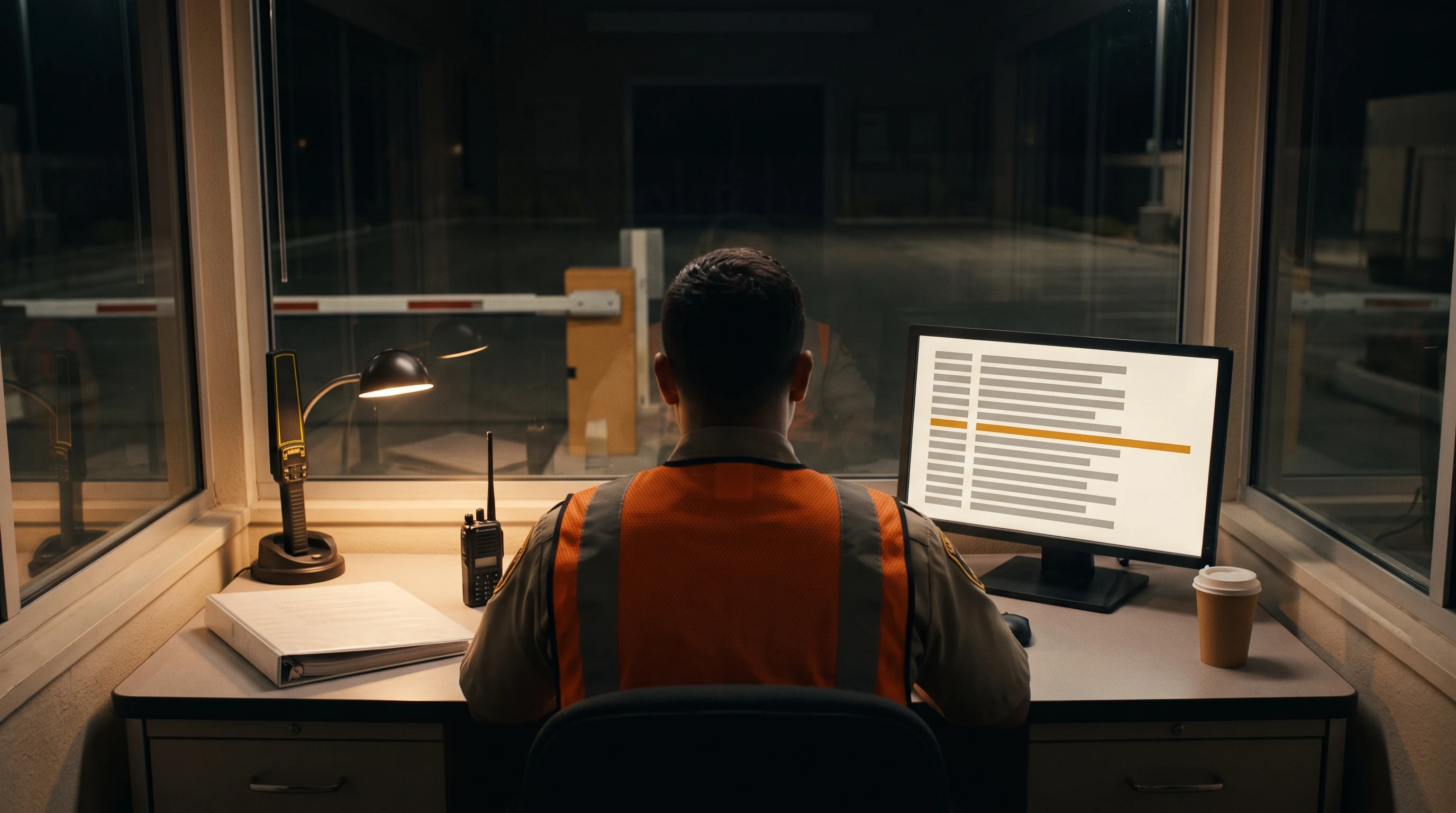
What we build on, and what we add.
- Back office
Scheduling & payroll
WinTeam, TrackTik's back office, or Gusto and QuickBooks Payroll at the smaller end. MicroForensics reads officer rosters, post schedules, and pay-period boundaries as a read-only consumer, and reconciles the §226 wage statement against the per-period attestation. We don't replace the payroll run.
- Guard tour
Patrol telemetry
Silvertrac, TrackTik, Trackforce, or another checkpoint-scan platform. Tour logs prove the officer was at post through the meal window — presence, not wage compliance. MicroForensics pairs each pay period's telemetry with the signed attestation that answers it, so the tour record stops standing alone.
- Compliance overlays
The on-duty meal record
The written on-duty meal agreement — revocable in writing at any time, and answered per pay period rather than filed once at hire; the post-Augustus rest-period attestation; fifth-hour alerts routed to dispatch before the §512 window expires; and the SB 553 plan acknowledgment, training record, and violent incident log on the same surface. Bilingual (EN/ES) throughout.
We build the connector for your stack — by API where one exists, by export, SFTP, or structured manual entry where one doesn’t — scoped and priced in the records diagnostic.
One overlay fits this work exactly. Since July 1, 2024, Labor Code §6401.9 has required nearly every California employer to maintain a written workplace violence prevention plan, train employees on it, and keep a violent incident log — with the log and related records retained five years and produced to employees and their representatives within 15 calendar days of a request. For a patrol operator the incidents that populate that log are the job: the trespass, the altercation, the subject who won't leave. The gap is rarely a missing plan. It is that an officer's incident report never becomes a logged entry with a documented response, and that nobody could assemble the file inside fifteen days if a representative asked. Those are records the state compels whether or not anyone helps you keep them, so there is no marginal downside to keeping them well. None of it is a PAGA argument — these records are owed on their own terms. The §3395 outdoor-heat plan and its documented training cover outdoor posts and foot patrols the same way.
One production package. Hours, not weeks.
A lawyer’s letter demanding records usually arrives before any lawsuit does, and a §2699 PAGA notice after it. When the letter lands, the authorized custodian of records on your team — not Floburn — exports one production package in hours, not weeks, and authenticates it as the person who has held it all along.
An alert reaches the foreman or dispatcher while the shift is still open, carrying what to do and what to enter — so the break gets taken rather than a premium owed. Entries are captured as the shift happens — timestamped, signature-captured, tamper-evident — not assembled after a claim lands. Payroll, timekeeping, HR, and safety are reconciled into one record, so production is an export from one place rather than a search across several: the payroll records, the timecards with each short break and the premium paid beside it, the written policy your crews acknowledged and each dated per-period sign-off — on a cadence of its own, decoupled from the payroll run — the training completions, and the hazard, heat, and incident records. The records that can go into the package are inventoried with you in the records diagnostic.
The package exists before the letter does — the timeline is a property of how the record is kept, not a promise about your matter. No outcome is guaranteed; every matter turns on its facts.
How production works→What employers in your industry ask us first.
01We already run TrackTik (or Silvertrac). Doesn't the tour log prove compliance?
It proves presence, not wage compliance. Checkpoint scans and GPS place the officer at post through the meal window — which is exactly why unpaired telemetry is the plaintiff's exhibit, not yours: it shows an officer who worked through the window, with no record that the on-duty meal agreement was honored. MicroForensics reads the tour data you already produce and pairs it with the signed per-pay-period attestation that answers it.
02Our officers signed on-duty meal agreements at hire. Isn't that enough?
The agreement is where the defense starts, not where it ends. It's lawful only where the nature of the work prevents relief from all duty, and the officer can revoke it in writing at any time — so the litigation question is what happened each pay period, not what was signed at orientation. Donohue v. AMN Services (Cal. 2021) presumes violations from the time records themselves; the per-pay-period attestation is the contemporaneous evidence that answers it, pay period by pay period.
03Break relief depends on client sites we don't control. How do you scope that?
We scope to posts you actually staff and schedule. Where the client contract sets single-officer coverage, the record documents the reality — the on-duty meal agreement, rover relief where it exists, the logged exception when it doesn't. We don't promise a record for site conditions outside your control; the two-week records diagnostic tells you where those boundaries sit before you commit to anything.
04We have CBA-covered officers under AB 1512. Does this apply to us?
Yes, and the calendar matters: AB 1512's carve-out for CBA-covered security officers sunsets January 1, 2027, and absent renewal in Sacramento the Augustus rest-period rules reach union shops again. Building the rest and meal record now means the sunset changes your statute, not your operation. For non-union posts, Augustus has applied since 2016, and the record is already load-bearing.
05We wrote an SB 553 plan back in 2024. Isn't that the compliance piece done?
The plan is one of five things Labor Code §6401.9 requires. The others are training, a violent incident log, five-year retention of the log and related records, and production to employees and their representatives within 15 calendar days of a request. In patrol operations the gap is almost never the plan — it is that officers' incident reports never become logged entries with a documented response, and that the file could not be assembled inside fifteen days if a representative asked for it. That record is compelled whether or not anyone helps you keep it, which is why keeping it properly costs you nothing you weren't already owed. MicroForensics routes the incident into the log, records what was done about it, and keeps the file production-ready.
Free 30-minute discovery call.
Tell us about your timekeeping and payroll stack, your headcount, and what’s prompting the conversation. We’ll tell you whether the records diagnostic makes sense, which way to run it — standard, or through your lawyer — and what to expect if you proceed.
Free · 30 minutes · a fit conversation, not a sales call. If the diagnostic isn’t worth doing, we’ll tell you.
Floburn Inc. is not a law firm and does not provide legal advice. Counsel advises Floburn on system design and does not represent your company; retain your own counsel for advice specific to your situation.