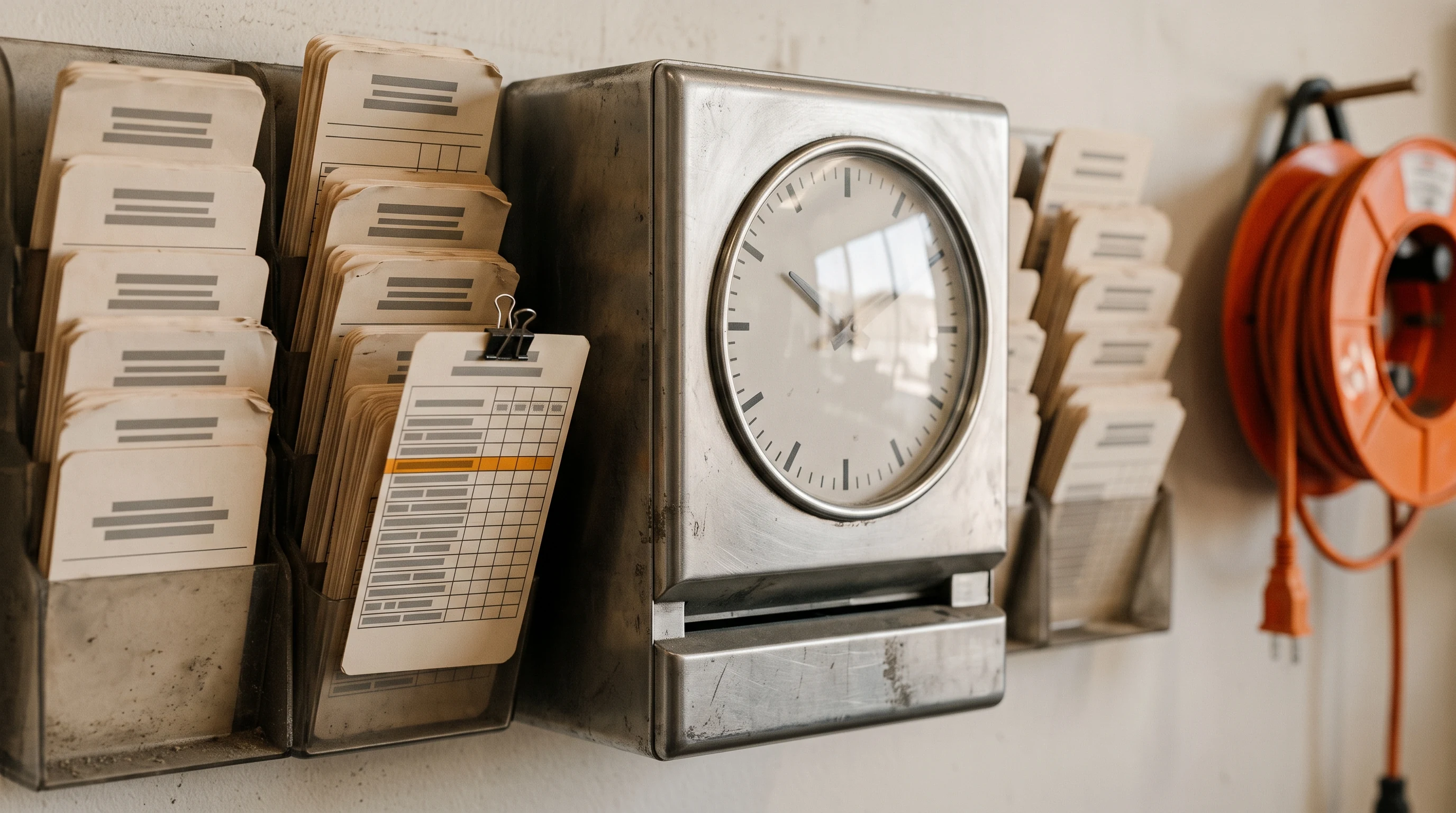
The clock rounds to the quarter hour. It has no field for the fix.
MicroForensics, built for the fabricated-metal, plastics, and furniture shops that run fixed production shifts — from the Vernon–Commerce–Gardena corridor to the Inland Empire. The line makes the fifth hour predictable; the legacy wall clock makes the record silent. California already requires that record, and the heat plan and training file beside it. What it also requires is the fix entered beside the issue it corrects. A shift lead is alerted to a short break and gets it taken while the shift is still open — and when a lawyer's letter demanding records arrives, your own authorized custodian of records answers it from one place, the §3396 heat plan and the training file with it. We run that loop on the uAttend or Lathem clocks, QuickBooks Time, or ADP and Paychex bolt-ons you already have.
Free · 30 minutes · a fit conversation, not a sales call. If the diagnostic isn’t worth doing, we’ll tell you.
This page shows how it works in your industry. For the full walkthrough — the statute text, how we close a missed break, what the record actually contains — see MicroForensics.
Three structural reasons the shop-floor record goes quiet.
- 01
Quarter-hour rounding meets the Donohue presumption.
Job-shop wall clocks still round punches to the quarter hour. Donohue v. AMN Services (Cal. 2021) barred rounding for meal-period punches and reads a rounded or missing punch as a presumed violation, and whether that no-rounding logic reaches every system that captures exact minutes is the question pressed in Camp v. Home Depot, pending decision before the California Supreme Court. A rounded punch cannot say whether the break ran on time, short, or at all — and it cannot say what the shop did about it. The signed exception and the correction entered beside it can.
- 02
The line runs through the fifth hour.
Fixed production shifts make the §512 fifth-hour window predictable — and on a busy run, routinely crossed: the line doesn't pause because a meal window opened. Predictability is the operational upside. Real-time alerts reach the shift lead before the window expires, and the bilingual sign-off — load-bearing on California's heavily Spanish-primary production floors — records what actually happened, in the employee's own words.
- 03
Indoor heat reached the shop floor.
Cal/OSHA's indoor heat standard (8 CCR §3396, effective July 23, 2024) reaches foundries, extrusion, and un-air-conditioned shops once the floor hits the standard's 82°F trigger. Where it applies, the shop owes a written plan, cool-down access, and training — and the IIPP requires that training to be documented (8 CCR 3203(b)(2)) and each hazard found to be recorded with the correction made (3203(b)(1)). Those are compelled records. The one that goes missing is the correction.
What we build on, and what we add.
- Timekeeping
Wall clocks & time apps
uAttend or Lathem wall clocks, QuickBooks Time, or the timekeeping bolt-on inside ADP or Paychex. We integrate as a read-only consumer — punches in, per-pay-period attestations routed out. Rounding settings get flagged in the records diagnostic; nobody on the floor learns a new clock.
- Payroll
Payroll & wage statements
ADP, Paychex, QuickBooks Payroll, or Gusto. MicroForensics reconciles the §226 wage statement against the attestation record each cycle — including the separately itemized rest-and-recovery lines §226.2 requires where piece rates run. We don't replace the payroll run.
- Shop systems
Job costing & travelers
The traveler and routing sheet track setup and run time against the work order — job costing for quoting, not payroll time. MicroForensics leaves the quoting side alone and captures the compliance record the job clock was never built to hold: breaks, hours, and the employee's signature.
We build the connector for your stack — by API where one exists, by export, SFTP, or structured manual entry where one doesn’t — scoped and priced in the records diagnostic.
Where piece rates run — furniture shops are where this work meets them — Labor Code §226.2 requires rest and recovery periods paid separately at an average hourly rate, other nonproductive time paid at least at minimum wage, and both itemized on the wage statement. Each is a per-pay-period records question, and the same attestation surface carries it alongside meal and rest breaks.
One production package. Hours, not weeks.
A lawyer’s letter demanding records usually arrives before any lawsuit does, and a §2699 PAGA notice after it. When the letter lands, the authorized custodian of records on your team — not Floburn — exports one production package in hours, not weeks, and authenticates it as the person who has held it all along.
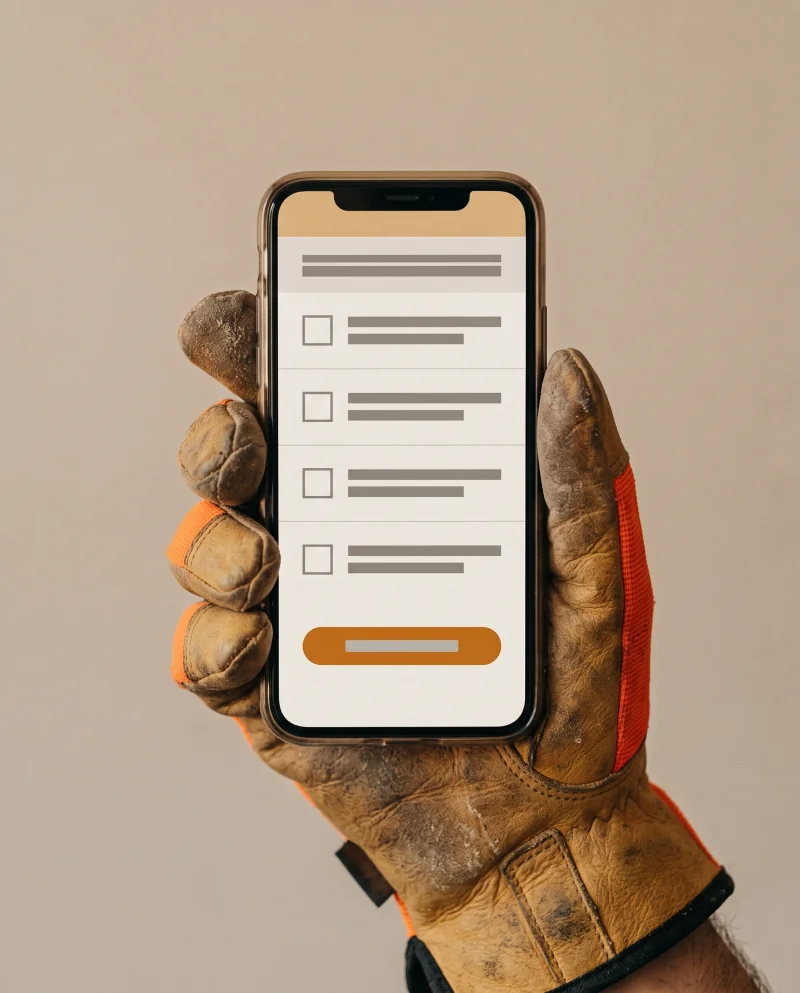
An alert reaches the foreman or dispatcher while the shift is still open, carrying what to do and what to enter — so the break gets taken rather than a premium owed. Entries are captured as the shift happens — timestamped, signature-captured, tamper-evident — not assembled after a claim lands. Payroll, timekeeping, HR, and safety are reconciled into one record, so production is an export from one place rather than a search across several: the payroll records, the timecards with each short break and the premium paid beside it, the written policy your crews acknowledged and each dated per-period sign-off — on a cadence of its own, decoupled from the payroll run — the training completions, and the hazard, heat, and incident records. The records that can go into the package are inventoried with you in the records diagnostic.
The package exists before the letter does — the timeline is a property of how the record is kept, not a promise about your matter. No outcome is guaranteed; every matter turns on its facts.
How production works→What employers in your industry ask us first.
01Our wall clock rounds to the quarter hour. Is that actually a problem?
For meal punches, yes. Donohue v. AMN Services (Cal. 2021) barred rounding meal-period punches and treats a rounded or missing punch as a presumed violation unless the employer shows otherwise, and whether that no-rounding logic reaches every system that captures exact minutes is the question pressed in Camp v. Home Depot, pending decision before the California Supreme Court. The fix is not necessarily a new clock. We flag the rounding settings in the records diagnostic, and the per-pay-period record supplies what the rounded punch cannot: the employee's own signed answer, the premium where one was owed, and a dated note of what changed on the floor. Labor Code §2699(g) caps PAGA civil penalties at 15 percent where all reasonable steps were taken before a notice arrives, §2699(h) at 30 percent for remediation within 60 days after; the court decides whether the steps were enough, on the totality of the circumstances and the size and resources available to the employer.
02Our ERP tracks every job to the minute. Doesn't that cover us?
Job costing tracks setup and run time against the traveler so the next quote is right — it is job time, not payroll time. It says nothing about whether a meal break was offered, taken on time, or cut short, and it produces no employee attestation. MicroForensics doesn't touch the quoting side; it captures the compliance record from the wall clock and payroll data, with the crew's per-pay-period sign-off joining the audit trail.
03Our shop is climate-controlled. Does the indoor heat standard even apply to us?
Mostly no. §3396 (effective July 23, 2024) triggers at an indoor temperature of 82°F, with tighter duties at 87°F, so a floor that holds under the threshold rarely engages it — foundries, extrusion, and un-air-conditioned buildings in an Inland Empire summer are a different matter. Where it applies, what you owe is a written plan, cool-down access, and training the IIPP requires you to document (8 CCR 3203(b)(2)), plus a record of each hazard found and the correction made (3203(b)(1)). California does not ask you to log every cool-down period. It asks you to show the plan, the training, and the response — which is the same shape as the meal-and-rest record, and rides the same surface.
04Can a per-pay-period sign-off run on a two-shift floor without stopping the line?
Yes. The cadence is per pay period, not per shift, and the sign-off runs through SMS or a single short link — in English or Spanish — so second shift attests the same way first shift does. What runs in real time is the alerting: the shift lead hears about an open fifth-hour window before it expires, whenever the shift started. Nothing about the line changes; the record accrues alongside it.
Free 30-minute discovery call.
Tell us about your timekeeping and payroll stack, your headcount, and what’s prompting the conversation. We’ll tell you whether the records diagnostic makes sense, which way to run it — standard, or through your lawyer — and what to expect if you proceed.
Free · 30 minutes · a fit conversation, not a sales call. If the diagnostic isn’t worth doing, we’ll tell you.
Floburn Inc. is not a law firm and does not provide legal advice. Counsel advises Floburn on system design and does not represent your company; retain your own counsel for advice specific to your situation.