The route clock logs every arrival — not the break between sites.
MicroForensics, built for the landscape maintenance and tree-care operators whose crews clock job to job across a route — where the time record captures every arrival and no meal break between them. California already requires that record, the §226.2 lines on piece-rate tree work, and a heat plan the crew has been trained on. What it also requires is the fix entered beside the issue it corrects. A crew leader is alerted to a short break and gets it taken while the shift is still open — and when a lawyer’s letter demanding records arrives, your own authorized custodian of records answers it from one place, the §3395 heat plan and the training file with it. Runs on top of the BusyBusy, ExakTime, ClockShark, LMN, or Aspire data you already produce. No new software for crew leaders.
Free · 30 minutes · a fit conversation, not a sales call. If the diagnostic isn’t worth doing, we’ll tell you.
This page shows how it works in your industry. For the full walkthrough — the statute text, how we close a missed break, what the record actually contains — see MicroForensics.
Three structural reasons landscaping records fail when a PAGA notice tests them.
- 01
The break between sites never gets logged.
A field time clock is built to log job starts and stops. A crew hits five sites; the app records every arrival — and the meal break between site two and site three shows up nowhere. Under Donohue v. AMN Services (Cal. 2021), time records showing missed, short, or late meal periods raise a rebuttable presumption of violation. Answering that takes evidence about the period itself: what the crew says happened, the premium paid where one was owed, and the route change recorded beside it. The route log carries none of the three.
- 02
Piece-rate tree work carries §226.2.
Tree crews paid per tree or per job fall under Labor Code §226.2: rest and recovery periods and other nonproductive time must be paid separately — rest and recovery at an average hourly rate — and itemized on the wage statement. That defense turns on the record too: a per-period attestation that the separate line items match the breaks the crew actually took.
- 03
Spanish-primary crews, English-only paperwork.
Landscaping crews run 50% Hispanic nationally (BLS 2023) and heavily Spanish-primary in California. An attestation signed in a language the employee reads is stronger evidence than one signed in a language they don’t. MicroForensics routes every per-pay-period sign-off bilingually — English or Spanish, the employee’s choice — so the signature reflects something the employee actually understood.
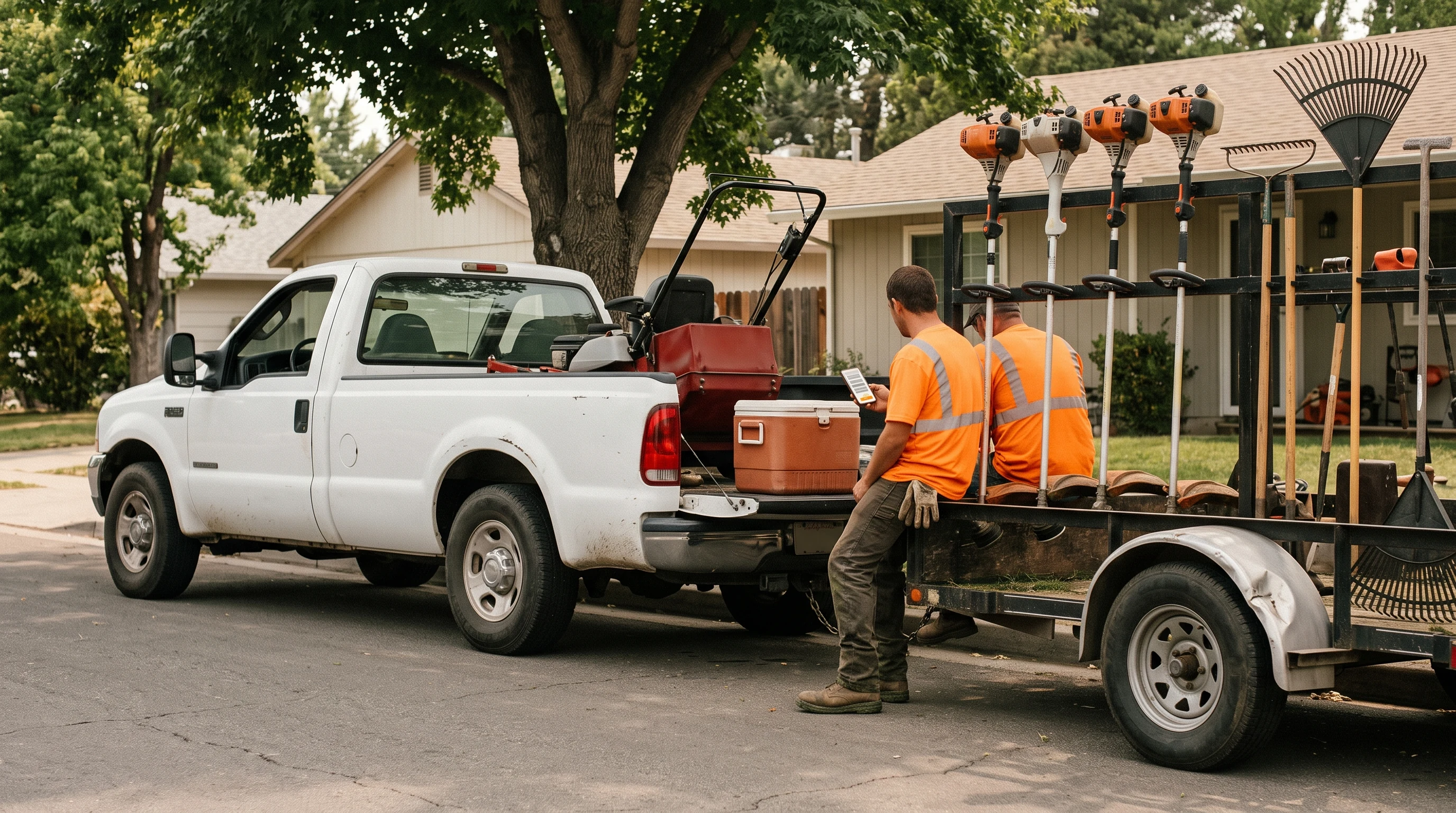
What we build on, and what we add.
- Field time
Route clocks
BusyBusy, ExakTime, or ClockShark — the clock your crews already carry job to job. We integrate as a read-only consumer: MicroForensics ingests the job-start and job-stop data and routes the attestation on top of it. Crews see no change in the tool they actually touch.
- Business management
LMN & Aspire
Where the operation runs on LMN or Aspire for estimating, scheduling, and job costing, we read crew and route structure from the platform you already pay for. The attestation follows the crew, not the office — and the record stays queryable by crew, route, and pay period.
- Payroll & overlays
Payroll and the wage statement
Gusto, QuickBooks Payroll, ADP, or Paylocity. MicroForensics reconciles the §226 wage statement against the per-period attestation — including the separate §226.2 line items on piece-rate tree work — and carries the heat attestation on the same surface. Bilingual (EN/ES) by default. We don’t replace the payroll run.
We build the connector for your stack — by API where one exists, by export, SFTP, or structured manual entry where one doesn’t — scoped and priced in the records diagnostic.
The heat overlay runs at full strength here: landscaping is one of the five industries Cal/OSHA §3395 names in its high-heat provisions, which activate at 95°F. What §3395 requires is a written heat illness prevention plan, shade and cool-down access, and training — with the IIPP requiring that training to be documented (8 CCR 3203(b)(2)) and each hazard found to be recorded with the correction made (3203(b)(1)). California does not ask you to log every cool-down a crew member takes. It asks you to show the plan, the training, and the response — and the response is the half that goes missing on a route.
One production package. Hours, not weeks.
A lawyer’s letter demanding records usually arrives before any lawsuit does, and a §2699 PAGA notice after it. When the letter lands, the authorized custodian of records on your team — not Floburn — exports one production package in hours, not weeks, and authenticates it as the person who has held it all along.
An alert reaches the foreman or dispatcher while the shift is still open, carrying what to do and what to enter — so the break gets taken rather than a premium owed. Entries are captured as the shift happens — timestamped, signature-captured, tamper-evident — not assembled after a claim lands. Payroll, timekeeping, HR, and safety are reconciled into one record, so production is an export from one place rather than a search across several: the payroll records, the timecards with each short break and the premium paid beside it, the written policy your crews acknowledged and each dated per-period sign-off — on a cadence of its own, decoupled from the payroll run — the training completions, and the hazard, heat, and incident records. The records that can go into the package are inventoried with you in the records diagnostic.
The package exists before the letter does — the timeline is a property of how the record is kept, not a promise about your matter. No outcome is guaranteed; every matter turns on its facts.
How production works→What employers in your industry ask us first.
01We’re on BusyBusy (or ExakTime, or ClockShark) with GPS on every truck. Doesn’t that record protect us?
It does the opposite of what most owners assume. GPS and geofence data prove where the crew was, minute by minute — which makes a missing meal break easier to see, not harder. Under Donohue v. AMN Services (Cal. 2021), time records showing missed, short, or late meal periods raise a rebuttable presumption of violation, and unpaired route telemetry is the other side's exhibit rather than yours. MicroForensics rides on the clock you already run, reads the route data, and pairs it with what the telemetry can never contain: the crew's own account of the period, the premium where one was owed, and the correction entered beside it. Labor Code §2699(g) caps PAGA civil penalties at 15 percent where all reasonable steps were taken before a notice arrives, §2699(h) at 30 percent for remediation within 60 days after — and the court decides whether the steps were enough.
02Most of my crews are Spanish-first. The crew leader translates — does that count?
Verbal translation is exactly the gap: the crew leader explains, the crew nods, and the system captures none of it. In court, that conversation never happened. MicroForensics routes every attestation bilingually — each employee signs in English or Spanish, their choice, on their own phone or a shared device at the yard. Crews run 50% Hispanic nationally (BLS 2023) and heavily Spanish-primary in California; the record is built for that from the start.
03We pay tree crews by the tree. What does §226.2 change about our record?
Labor Code §226.2 (effective 2016) requires piece-rate workers to be paid separately for rest and recovery periods — at an average hourly rate — and for other nonproductive time, each itemized on the wage statement. Time data alone won’t show any of that. MicroForensics reconciles the §226.2 line items against a per-period attestation that the rest and recovery periods were actually taken. No piece-rate work? We drop the module rather than charge you for it.
04Our install crews are signatory to a Laborers agreement. Does PAGA even reach us?
Possibly not for those crews. Labor Code §2699.6 exempts certain construction-industry work performed under a qualifying collective bargaining agreement, and landscape-construction crews under Laborers CBAs can sit outside PAGA at the margin. Maintenance and tree-care crews outside the agreement generally don’t. Which side of the line your mix falls on is one of the first things we work through with you on the discovery call.
Free 30-minute discovery call.
Tell us about your timekeeping and payroll stack, your headcount, and what’s prompting the conversation. We’ll tell you whether the records diagnostic makes sense, which way to run it — standard, or through your lawyer — and what to expect if you proceed.
Free · 30 minutes · a fit conversation, not a sales call. If the diagnostic isn’t worth doing, we’ll tell you.
Floburn Inc. is not a law firm and does not provide legal advice. Counsel advises Floburn on system design and does not represent your company; retain your own counsel for advice specific to your situation.